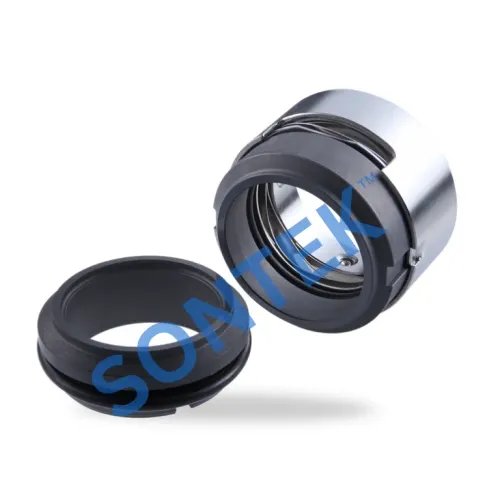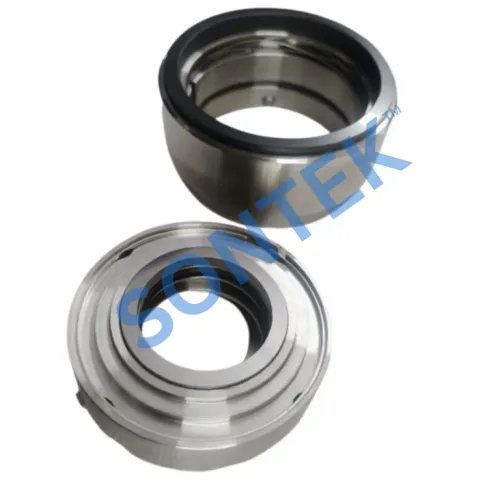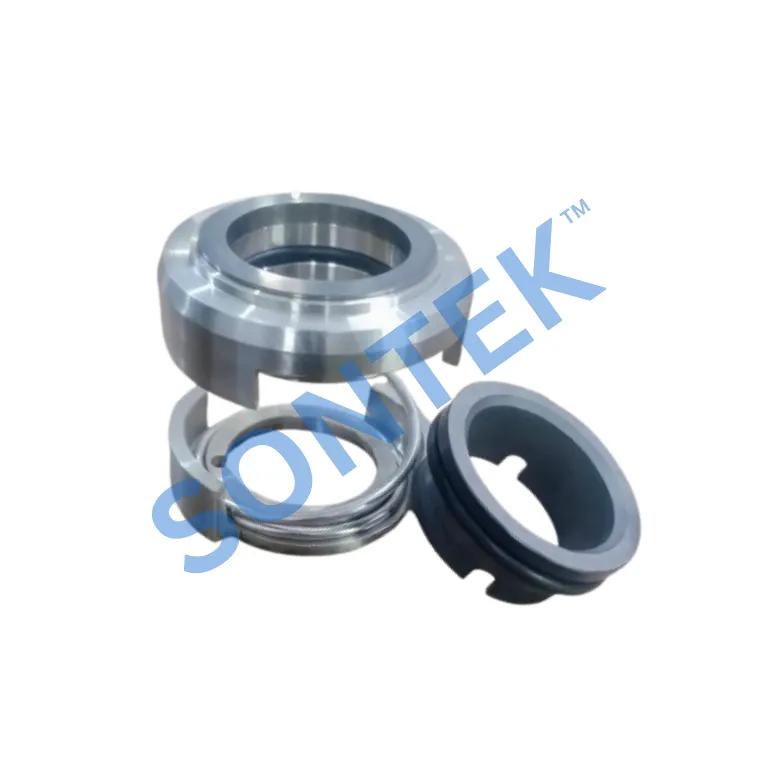
Nexton Seals is a trusted Mechanical Seal Manufacturer in Delhi, offering high-performance sealing solutions for pumps, compressors, mixers, and other rotating equipment. The working mechanism relies on two primary flat surfaces—one stationary seal face secured to the equipment housing and one rotating seal face fixed to the shaft. These faces are engineered to extremely high flat tolerances and are pressed tightly against each other by springs, bellows, or hydraulic pressure from the system fluid itself. A micro-thin film of fluid remains between the two faces, providing necessary lubrication and cooling while maintaining a tight seal to minimize friction, heat generation, and wear during continuous operation.
In addition to the primary sealing faces, a mechanical seal assembly incorporates secondary seals and mechanical drive elements. Secondary seals, such as O-rings, V-rings, or gaskets made from elastomeric or fluoropolymer materials, prevent leakage along static joints like the shaft sleeve or gland plate. Meanwhile, metal components including springs, drive pins, and housings work together to maintain uniform contact pressure between the faces, accommodating minor shaft vibration, end-play, and thermal expansion without breaking the seal.
Compared to traditional soft gland packing, mechanical seals offer significant advantages in modern industrial operations. They drastically reduce fluid loss, eliminate shaft sleeve wear, and require far less regular maintenance. Furthermore, mechanical seals allow machinery to operate at higher pressures, temperatures, and rotational speeds while safely handling hazardous, toxic, or corrosive chemicals without environmental discharge.
Mechanical seals are categorized into various design types to suit specific operating environments and media. Common configurations include single seals for standard fluid containment, double or tandem seals for extra safety with hazardous fluids, and cartridge seals for pre-assembled, easy installation. Material selection for the seal faces—ranging from carbon-graphite and silicon carbide to tungsten carbide—depends directly on the abrasiveness, temperature, and chemical nature of the fluid being processed.
In addition to the primary sealing faces, a mechanical seal assembly incorporates secondary seals and mechanical drive elements. Secondary seals, such as O-rings, V-rings, or gaskets made from elastomeric or fluoropolymer materials, prevent leakage along static joints like the shaft sleeve or gland plate. Meanwhile, metal components including springs, drive pins, and housings work together to maintain uniform contact pressure between the faces, accommodating minor shaft vibration, end-play, and thermal expansion without breaking the seal.
Compared to traditional soft gland packing, mechanical seals offer significant advantages in modern industrial operations. They drastically reduce fluid loss, eliminate shaft sleeve wear, and require far less regular maintenance. Furthermore, mechanical seals allow machinery to operate at higher pressures, temperatures, and rotational speeds while safely handling hazardous, toxic, or corrosive chemicals without environmental discharge.
Mechanical seals are categorized into various design types to suit specific operating environments and media. Common configurations include single seals for standard fluid containment, double or tandem seals for extra safety with hazardous fluids, and cartridge seals for pre-assembled, easy installation. Material selection for the seal faces—ranging from carbon-graphite and silicon carbide to tungsten carbide—depends directly on the abrasiveness, temperature, and chemical nature of the fluid being processed.
Keywords